
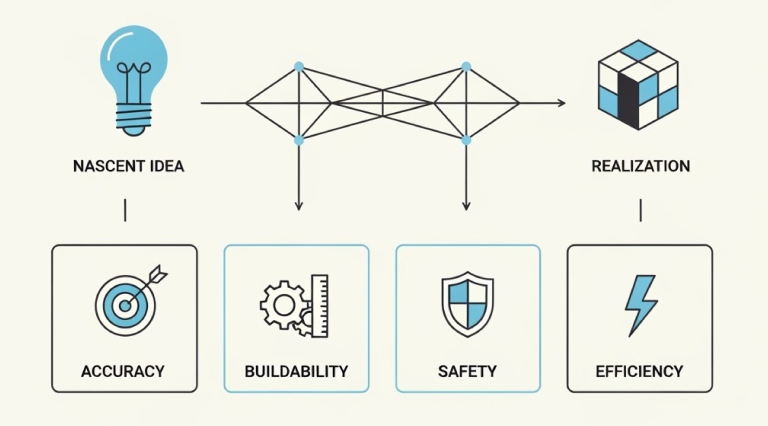
For decades, the corporate world has viewed design through a narrow lens: the “make it pretty” department. Designers were the ones you called at the end of a project to polish the slide deck, refine the logo, or choose the right shade of blue for the website. This is the era of Graphic Design as a Utility.
But as global markets become more volatile, products more digital, and consumer expectations more complex, a fundamental shift is occurring. Design is moving from the perimeter of business to its very core. We are entering the era of Systemic Design as Strategy.
The Limitations of the “Graphic” Mindset
Graphic design is primarily concerned with the interface—the touchpoint where the user meets the brand. While essential, focusing solely on visuals addresses the symptoms of a business challenge rather than the cause.
When design is treated as a cosmetic layer, it creates a “veneer” effect. You might have a beautiful app interface (Graphic Design), but if the underlying supply chain is unethical or the customer service loop is broken, the user experience fails. Graphic design solves for clarity and beauty; Systemic Design solves for viability and impact.
What is Systemic Design?
Systemic Design is the integration of systems thinking with design thinking. It’s the practice of designing not just the object, but the environment, the processes, and the incentives that surround it.
In a corporate strategy context, Systemic Design asks different questions:
- Instead of: “How do we make this logo look modern?”
- Systemic Design asks: “How does our brand identity signal our shift toward a circular economy model to our stakeholders?”
- Instead of: “How do we reduce clicks in this app?”
- Systemic Design asks: “How does this digital interface influence long-term user behavior and mental health?”
Why Strategy Needs Systems Thinking Now
The “Great Acceleration” of technology means businesses can no longer afford to operate in silos. A change in a pricing model affects customer loyalty, which affects data collection, which affects AI training models, which eventually affects brand equity.
Here is how Systemic Design transforms corporate strategy:
1. Mapping Interdependencies
Traditional strategy often uses linear models (Value Chain Analysis). Systemic Design uses Feedback Loops. It identifies how different parts of the organization—HR, R&D, Marketing—interact. By mapping these, leaders can see “hidden” bottlenecks that a simple visual rebrand could never fix.
2. Designing for Resilience, Not Just Efficiency
Corporate strategy has long been obsessed with “lean” efficiency. However, lean systems are often brittle. Systemic designers look for “redundancy” and “diversity” within a business ecosystem, ensuring that the company can survive a pivot in the market or a disruption in the supply chain.
3. From Human-Centered to Life-Centered
While Design Thinking popularized “Human-Centered Design,” Systemic Design pushes further toward Life-Centered Design. It considers the “unseen” stakeholders: the environment, the local community, and future generations. In an era of mandatory ESG (Environmental, Social, and Governance) reporting, this isn’t just “nice to have”—it’s a regulatory necessity.
Implementing the Shift: The New Design Leader
For a corporation to move beyond “graphic design,” the role of the Chief Design Officer (CDO) must change. They are no longer the “Brand Guardian”; they are the Orchestrator of Complexity.
To implement systemic design, organizations should:
- Bring Design to the “Front-End” of Strategy: Involve designers during the business model generation phase, not just the product launch phase.
- Cross-Pollinate Teams: Embed designers into “non-creative” departments like Finance or Legal to visualize complex data and identify systemic risks.
- Measure Outcomes, Not Outputs: Stop measuring the success of design by “number of assets produced” and start measuring it by “reduction in churn,” “employee retention,” or “carbon footprint reduction.”
The Bottom Line
Graphic design will always be the “voice” of a company, but Systemic Design is its “logic.” As we face an increasingly interconnected world, the companies that thrive won’t be the ones with the best-looking logos—they will be the ones whose entire organizational system is designed for purpose, adaptability, and long-term value.
It’s time to stop drawing the future and start designing the system that makes that future possible.